Rail Usage on the Abbey Line Continues to Rise in 2026
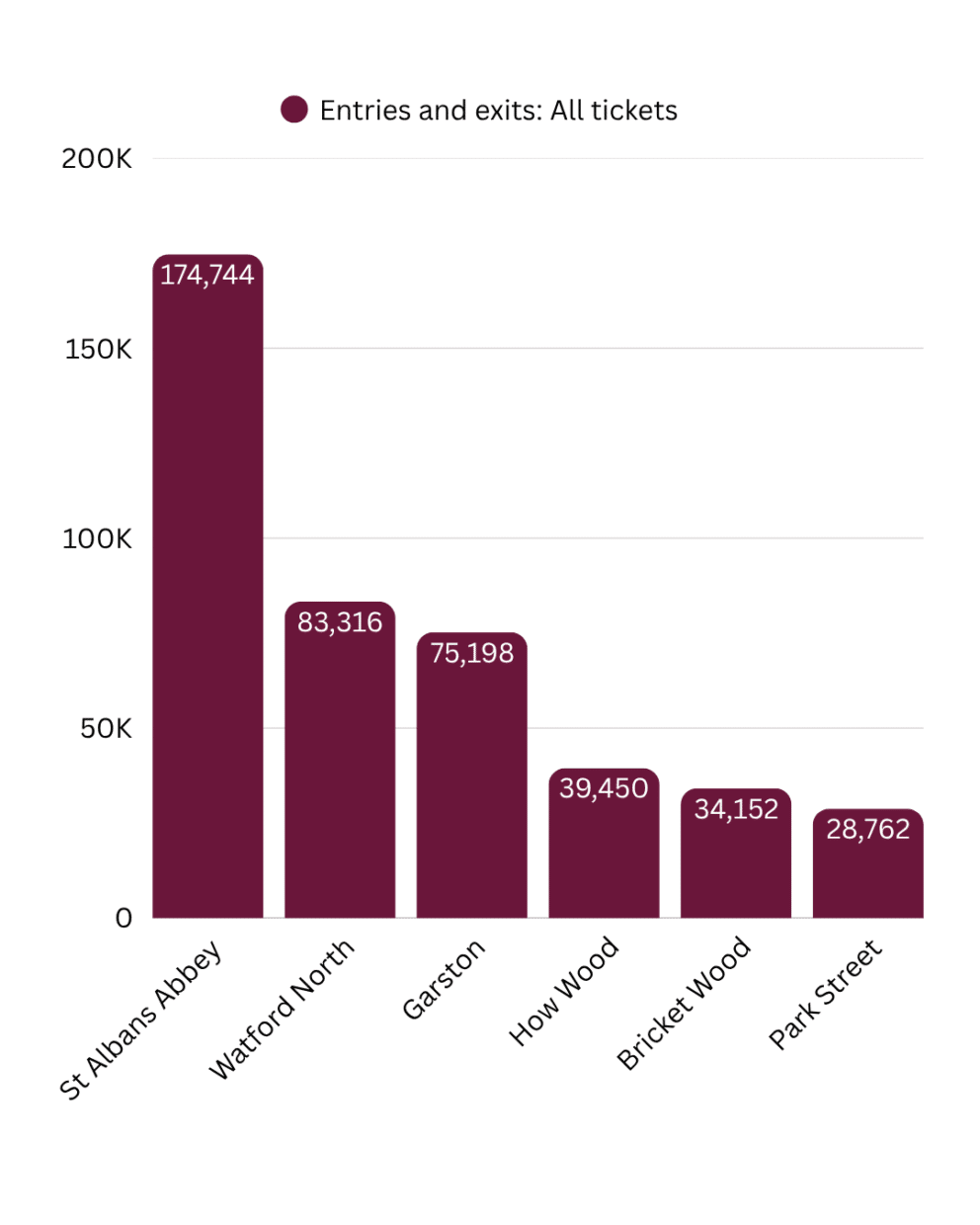
Passenger numbers across the Abbey Line have continued to grow, according to the latest Office of Rail and Road figures – with every station on the route recording an increase in entries and exits during 2025-26 compared with the previous year.
The latest figures show strong growth at all six Abbey Line stations, highlighting the line’s increasing importance for commuters, students, leisure travellers and local communities.
| Station | 2024-25 | 2025-26 | Change |
| St Albans Abbey | 149,394 | 174,744 | +17.0% |
| Park Street | 22,170 | 28,762 | +29.7% |
| How Wood | 29,104 | 39,450 | +35.5% |
| Bricket Wood | 27,058 | 34,152 | +26.2% |
| Garston | 53,142 | 75,198 | +41.5% |
| Watford North | 64,798 | 83,316 | +28.6% |
| Watford Junction | 6,940,122 | 7,387,442 | +6.4% |
The largest percentage increase was recorded at Garston, where passenger numbers rose by more than 41%, while How Wood saw growth of over 35%. Every station along the branch achieved double-digit growth, reflecting increasing confidence in rail travel and the value of local rail connections.
At the southern end of the line, Watford Junction saw passenger numbers rise by more than 447,000 journeys, exceeding 7.3 million entries and exits during the year. Meanwhile, St Albans Abbey welcomed more than 174,000 passengers, an increase of over 25,000 journeys compared with the previous year.
The latest Office of Rail and Road statistics also highlight the importance of Watford Junction as a major rail hub. The flow between Watford Junction and London Euston ranked among the five busiest rail flows in Great Britain involving at least one station outside London during 2025-26. The top-ranking flows in this category were all journeys travelling to or from London, underlining the capital’s continuing importance as a destination for work, education and leisure.
The presence of the Watford Junction-Euston flow in the national top five demonstrates the significant demand for rail travel between Hertfordshire and central London. It also reinforces the strategic importance of connections between the Abbey Line and the wider rail network, enabling passengers from St Albans Abbey, Park Street, How Wood, Bricket Wood, Garston and Watford North to access opportunities across the capital and beyond.
The continued growth demonstrates the important role the Abbey Line plays in connecting communities across south-west Hertfordshire with employment, education, leisure opportunities and the wider rail network.
Abbey Line Community Rail Partnership works alongside London Northwestern Railway, Network Rail, local authorities, community groups and volunteers to encourage rail use, improve stations and promote sustainable travel. Through community projects, station adoption, events and educational initiatives, the partnership helps to improve the railway as a safe, welcoming and accessible asset for local people.
As passenger numbers continue to rise across every station on the Abbey Line, and with Watford Junction remaining one of the country’s busiest rail hubs, the figures reinforce the case for continued investment in local rail services, station improvements and better connectivity for the communities the line serves.
Source: Office of Rail and Road station usage statistics, 2025-26.